Showing posts with label Theories Theorists and Conventions. Show all posts

Monday, 18 March 2013

The villain, the hero and the anti-hero


An anti-hero is not villain but there simply to be compared against the hero and cause minor conflict with them. The anti-hero is not outright bad but does have a lack of heroic or moral qualities. Many anti-heroes join forces with the heroes to fight against the villain. 
 
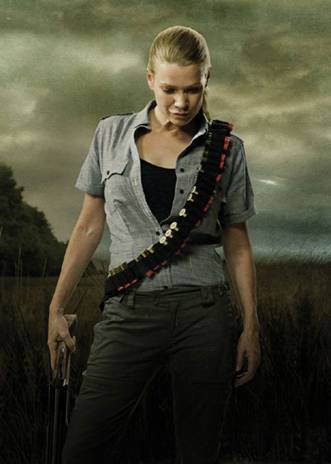
An example of this would be the Zombie TV series The Walking Dead. The hero is Rick Grimes who is the leader of the group of survivors and tries to protect them at often pesonal risk to himself. Before the apocalypse Rick was a police man and still wears the uniform and hat which is a symbol of authority and controlled order.   

The anti-hero of this series is Daryl Dixon who is a stereotypical 'red-neck'. This is shown through his accent, costume, violence and often racist and sexist comments.

Though these two characters are very different, they join forces against the common enemy of the zombies and Daryl becomes a second leader for the group of survivors.


In our trailer Sebastian is the hero and Jason the anti-hero. Jason joins forces with Sebastian to fight the zombies and to keep Samantha safe.   

Rick Altman and the Zombie Genre Theory


The zombie genre evolves depending on changing dynamics in politics, social issues and popular culture and often highlights or challenges established norms and social ideals.
 
Our film highlights the idea of passive learning in schools and how it changes students into mindless ‘zombies’ (if you will) with no free thought of their own.

In the genre theorist Rick Altman’s 1999 piece ‘A Semantic/Syntactic Approach to Film Genre’ he states that in the new millennium, films of the zombie genre have taken on new Semantic and Syntactic forms. Semantics being the study of meaning and Syntax the study of various signs which appear in a system and the possible arrangement of those signs.
 

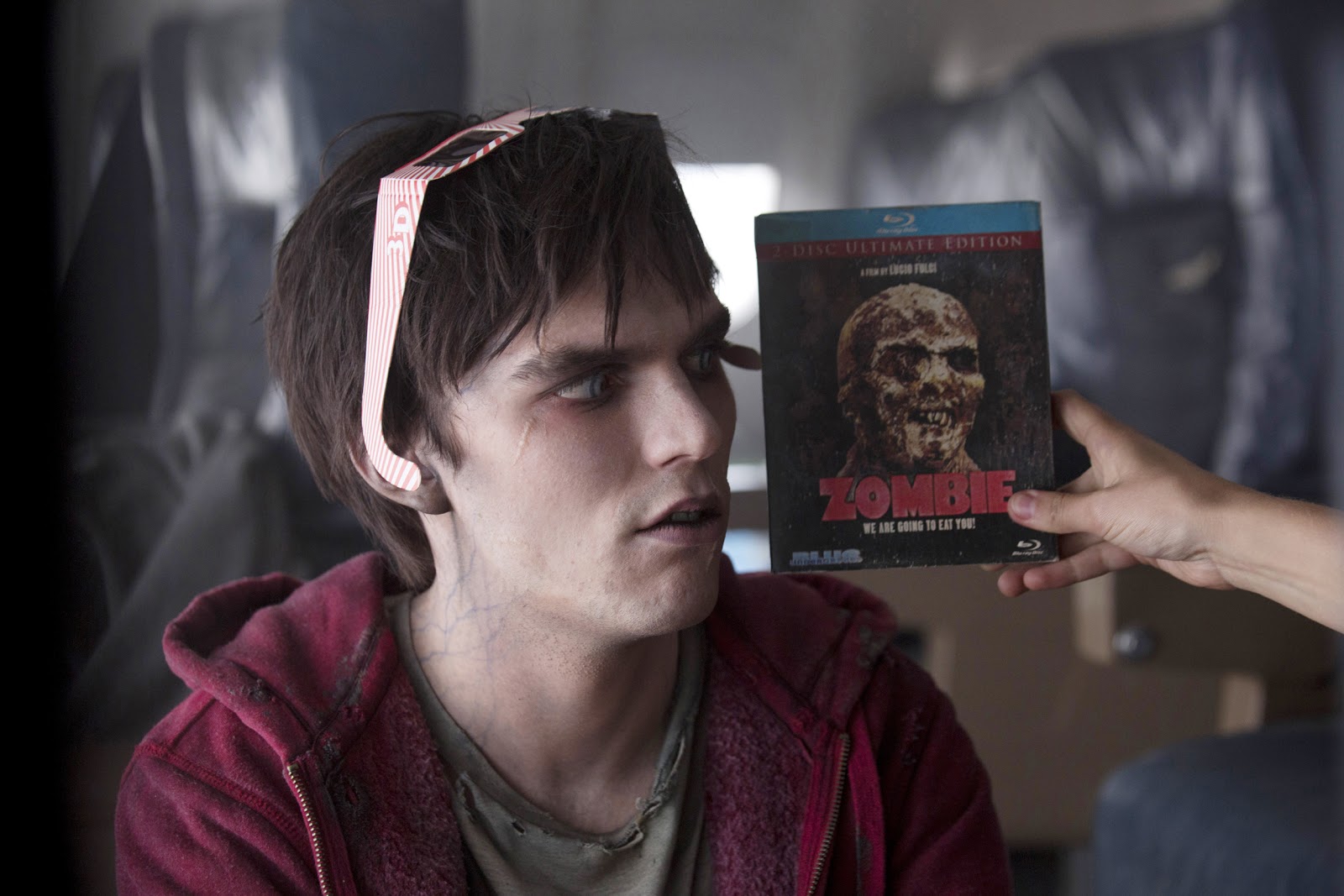
Contemporary zombie films have evolved from the B-movies uninterested in a deeper narrative and wider meaning to films centred on social and political conflict and exploring the human condition. This questioning of what makes us human is popular amongst film makers as zombies are humans who have been forced into their most primitive state and stripped of all emotion. Though even this idea of emotionless zombies has been challenged in such films as ‘Day of the Dead’ (1985) and ‘Warm Bodies’ (2013).
This is a clear example of how this genre
is constantly evolving and changing.     


Tuesday, 26 February 2013

Character Theory

In most zombie films, one of the conventions is the group unit. 


For our zombie survival group in the trailer, we went against Propp's character theory and only used five of the suggested seven essential characters:
The Villian - Zombies
The Hero - Sebastian
The Princess - Sam
The False Hero - Jason
The Doner - Science teacher, provides the world with a zombie virus

We decided to defy convention and use just the three main characters in our trailer as it shows how relationships are vitally significant to the teenage population, our target audience.

Final girl


The final girl theory is often used in the horror genre, as it shows that there is one girl who often survives till the end, to confront the killer and normally to tell the story to new people.


We have used this theory in our trailer through the main character of Sam. We decided her name should be androgynous as it clearly demonstrates her masucline traits.


The idea that Sam must have a relationship with the audience by the end of the film is vital, as it creates pathos.


By having the audience care for our main character, it makes the cliff hanger at the end of the film full of even more tension. Leaving the audience to worry what happened to her.

Tuesday, 29 January 2013

Conventions

In what ways does you media product use, develop or challenge forms and conventions of real media products?

Conventions we have used:

  • We have shots at the beginning of the trailer which establish equilibrium and 'The calm before the storm'
  • Our zombies are wearing a variety of different outfits so suggest that people form all walks of life and situations are affected by the virus
  • We have a male protagonist who through the film, fights for the safety of his female love interest this conforms with Laura Mulveys theory of the Male Gaze
  • Have shots of a hoard of zombies to show the gravity of the situation
  • We have acton shots of running, hitting, eating, panicking etc.
  • We used and eerie soundtrack at the beginning and a more dramatic action soundtrack during the apocalypse scenes which becomes increasingly dramatic and fast, building up to the climax at the end

Monday, 19 November 2012

The Male Gaze

'The Male Gaze' is a Laura Mulvey's theory that audiences view characters from a heterosexual male perspective. 

In our questionnaire the participants revealed that they would most like the protagonist to be male despite most of them being female.   

We shall apply this in our trailer by having;

  • A male protagonist
  • The majority of the zombies who are chasing our female characters would be male
  • The female characters would be dressed in 'sexier' clothing 
  • The character who we follow from being bitten to becoming a zombie is female
  • The character who is searching for food supplies in a kitchen is a female
Sexualised woman with phallic object 
Male presented strong and brave

Thursday, 15 November 2012

Conventions of the Genre

Here are some common conventions of Zombie films;

  1. People are made into Zombie's by a virus, radiation or an act of God
  2. The virus is passed through bites
  3. Zombies are not susceptible to pain/tiredness
  4. Zombie's can only be killed by the destruction of the brain or decapitation 
  5. The Zombie's outnumber the humans in the world of the film
  6. Zombie's are afraid of fire and/or bright lights
  7. Zombie's respond to and are attracted by sound
  8. Zombie's only eat human and sometimes animal flesh
  9. The ending is either ambiguous or unhappy
  10. Few if any of the original group of main characters survive 

Tuesday, 9 October 2012

Narrative Theory

This is our potential plot...
  • A zombie virus breaks out which is transferred through bites
  • The teenage protagonists are at school when they learn about the virus
  • They leave the school with a large group of their peers
  • The large group gradually get killed off until only the main three characters remain
  • A love triangle emerges between the main characters Sebastian (Seb), Samantha (Sam) and Jason
  • They get into trouble and Jason sacrifices himself so Seb and Sam can survive
  • They do escape but they are split up and the film ends with them searching for each other
After analysing our zombie plot we have discovered that it doesn't follow normal narrative theories. Such as Todorov's theory which states that narratives are structured in five stages:
  1. a state of equilibrium at the outset
  2. a disruption of the equilibrium by some action
  3. a recognition that there has been a disruption
  4. an attempt to repair the disruption
  5. a reinstatement of the equilibrium
This is because our plot has an ambiguous ending and so it does not end with equilibrium. However it does follow the conventions of Freytag's dramatic structure, as it ends with a catastrophe and Levi-Strauss' binary opposition with the obvious conflict of humans vs zombies.

Freytag's Dramatic Structure

  1. Exposition
  2. Rising Action
  3. Climax
  4. Falling Action
  5. Denouement/Catastrophe/Resolution
As previously stated our film does not follow most narrative theories though this diverting from the norm is a convention of the genre of zombie films.

Friday, 28 September 2012

Codes and Coventions of Teaser Trailers

CODES AND CONVENTIONS OF TEASER TRAILERS

(with examples)


After looking at five different film teaser trailers, from a variety of different genres, we have come to these conclusions:

1) Teaser trailers usually always have a green Approved for all Audiences screen, (green band)
 
2) There is usually an approximate release date
 
 
3) Teaser trailers generally use dialogue from the film rather than an independant voice over


4) Iconography plays a main part in many highly anticipated films
 
 
5) Many teaser trailers use anchorage in place of a voice over